Fleetguard Filters Drives Mega Plantation Initiative in Tamhanwadi Village
Various rural communities today face urgent environmental issues because of fast-growing deforestation practices, together with soil degradation and biodiversity depletion. The environmental problems in Tamhanwadi Village caused both depleted natural resources and altered local ecosystems.
The reduction of vegetation leads to both climate change and severe impacts on community livelihoods, which exposes citizens to environmental dangers. The pressing necessity for strong environmental restoration through community participation has become essential because of existing difficulties.
The recognition of this vital requirement resulted in the launching of a broad plantation initiative as a revolutionary answer. Through the joint efforts of a filtration company with Forest Department participation and a non-governmental organization's dedication, the project will create a Biodiversity Park through native sapling placement.
The project aims to restore the ecosystem while adding biodiversity and delivering sustainable advantages for the community through the creation of a resilient green network.
Collaborative Effort for Environmental Restoration
This large-scale plantation method succeeds through combined teamwork between community members. Multiple stakeholders from different sectors united to tackle the critical environmental problems existing in Tamhanwadi Village.
A filtration company at the forefront led project implementation by teaming up with local governmental organizations and dedicated members of an environmental NGO.
The partnership between organizations developed because of their united purpose to restore the local environment and activate community participation. Expert personnel from the Forest Department assisted with selecting proper native species, which resulted in the park matching the forest environment.
Local community members formed important partnerships with volunteers to lead the plantation drive logistics while they helped gather the resources needed for successful execution. The combined action of these groups resulted in tree planting success alongside the creation of an enduring environmental awareness, which benefits the community.
Experts performed extensive fieldwork and meetings, which allowed them to assess soil conditions along with climate suitability and local flora to select suitable species for reforestation purposes. A thorough assessment method verified that tissue-cultured plants would live well in the native environment, yet support natural ecosystem stability.
The initiative achieved its mission through community participation at every phase of implementation, which enabled adults to establish ownership of their surroundings. The project formed sustainable environmental management by conducting frequent community gatherings and planning events, which built strong local abilities.
Community involvement through this collaborative method led to the most efficient use of resources while creating an example that similar community-led initiatives could emulate in the area.
Implementation and Execution of the Plantation Drive

The plantation initiative established itself as a fundamental era for Tamhanwadi Village. Ground preparation conducted from November 2024 through January 15, 2025, made way for the successful conclusion of the project.
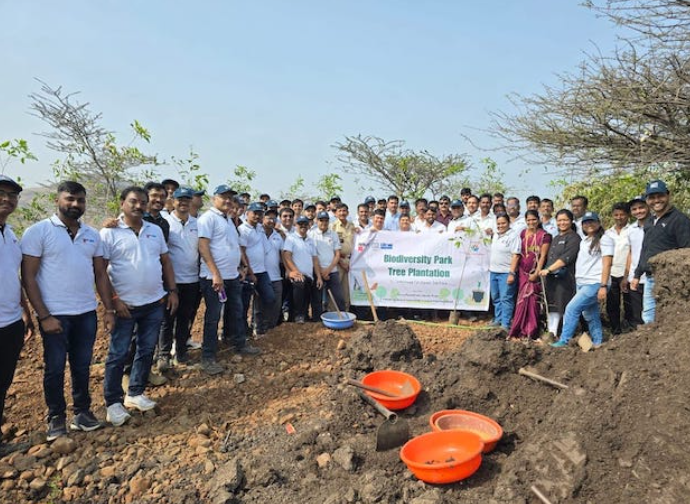
On that day, the village obtained its Biodiversity Park through careful planting of 2,000 saplings on the forested land designated for ecological gain. A total of 42 employees from the filtration company collaborated with NGO volunteers, Forest Department officials, and local community members under a shared purpose for environmental restoration.
The drive execution followed detailed planning to achieve the greatest effect possible. The team followed precise preparation methods before obtaining expert guidance to find perfect ways for sapling arrangement to maximize their development potential.
The team picked local plant species that showed strong characteristics to restore wildlife biodiversity while also demonstrating resistance to environmental changes. A Biodiversity Park will fulfill two essential purposes through the project: it will expand vegetation coverage while creating native habitats for wildlife to maintain ecological balance in the area.
The plantation initiative conducted its stages with two primary goals: high operational efficiency and environmental sustainability. The active involvement of residents quickened plantation progress and simultaneously cultivated their ownership toward sustaining the developing green area.
The collective initiative of residents has established a sustainable program that can be duplicated for environmental conservation programs throughout regions with similar challenges. Community members participated actively during the drive, which transformed the process into an ongoing representation of their ecological conservation and sustainable development commitment.
Sustainable Development and Community Empowerment
Plants alone do not define the plantation initiative, which brings benefits that span much deeper than tree cultivation. The initiative functions as an all-encompassing project to establish an independent environment-based system that helps both nature and neighbourhood residents.
The Biodiversity Park provides an interactive environment for people to witness indigenous species and observe techniques of responsible land stewardship. The established park will act as a learning facility that fosters environmental knowledge while enabling valuable experiential student, researcher, and community member educational activities.
The initiative requires continuous effort to sustain the park area. The filtration company joins forces with its NGO partner and backs up the local gram panchayat to maintain the park for three complete years. The sustainable maintenance program consists of periodic checks, watering the plant, monitoring its growth, and conducting periodic assessments to help the trees flourish.
The initiative extends beyond its current initiative of planting to protect environmental sustainability across multiple years. Community members receive formal training and outreach programs from which they will learn proper park maintenance methods and eventual operational expansion.
Various advantages stem from this project. The Biodiversity Park serves as an environmental solution by absorbing carbon dioxide, which leads to better air quality as well as climate stabilization in the area. Through this social initiative, the community bond strengthened, and people acquired a shared commitment to nature conservation.
The participation of local members delivered successful results to the project while establishing the groundwork for upcoming environmental projects. People in the community have evolved into environmental stewards through this initiative, which has created a rising level of environmental consciousness among residents.
Impact Created

The plantation initiative in Tamhanwadi Village has demonstrated its inaugural environmental and social advantages to the community. By planting 2,000 saplings, the locals have restored biodiversity, which provides our native tree species adapted to both local climate and soil conditions.
The maturing saplings will function as major carbon-sequestering components, which will establish a barrier against climate change impacts. When completed, the Biodiversity Park will advance air quality while lowering soil erosion and building a wildlife habitat for birds and small mammals, which will boost local ecosystem balance.
Socially, this initiative brought forward substantial changes to the local community. Employee participation together with governmental officials and NGO volunteers, and local residents in plantation activities has developed community responsibility and local stake.
Community members who joined environmental restoration efforts developed a better comprehension of sustainable practices, together with the essential need for ecological protection. The combined commitment between different community members has upgraded both the present environment and simultaneously created social capital, which functions as a resource for upcoming community development initiatives.
The Biodiversity Park holds a vision to become an educational resource that will benefit the local community. Community members, along with local school students, will gain access to use the park as an educational forum to research native plants, learn environment-friendly land management strategies, and do environmental conservation work.
Way Forward
The ongoing work will prioritize Biodiversity Park's long-term success while working to develop the model for different areas with related environmental problems. The following stage of the project will include constant sapling checking and maintenance work to support their growth and development.
The foundation will direct its core strategy toward community engagement through workplace sessions and education about sustainable practices combined with ecological conservation lessons. The project works to develop sustainable environmental restoration methods through its program, which trains nearby residents to independently maintain the park area.
The team plans to increase the scope of plantation activities beyond the initial area so that biodiversity benefits multiple communities. The initiative needs vital support from local government institutions, along with environmental NGOs and educational institutions, to expand its reach.
The collaborative efforts between stakeholders will secure more resources, enable technical support, and increase participation from different communities. Stakeholders intend to capitalize on their initial drive for advancement to develop interconnected green areas, which will strengthen the regional ecological stability.
Equality of objectives for this project targets the development of an Eco-friendly social structure that concurrently protects damaged land while supporting local communities.
This strategy demonstrates the united dedication of the participating groups to solve environmental problems alongside climate change, always keeping residents' quality of life in focus. The community must dedicate itself to developing the newly planted saplings alongside green initiatives to establish an enduring, environmentally friendly future.

CSRBOX
CSRBOX.org is the single largest CSR information dashboard for CSR heads, board members of companies, nonprofit leaders, fundraisers, government agencies and social businesses to find latest updates in CSR domain in India. The platform is powered by India's largest social sector platform NGOBOX.
IMPACT TALKS

|

|

|

|

|

|


