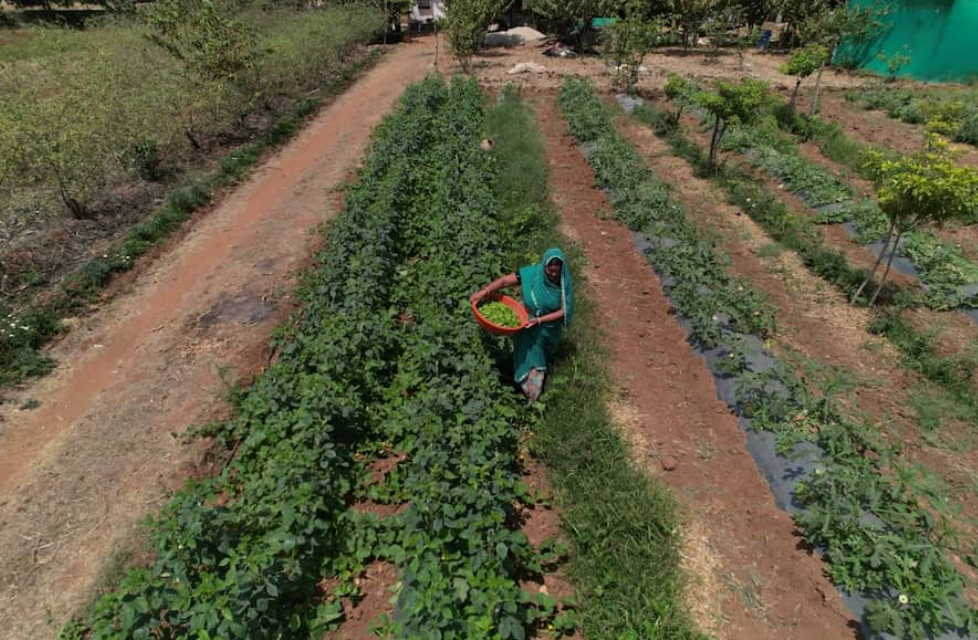
Hindustan Zinc’s CSR Project ‘Samadhan’ Transforms 35,000 Farmer Families in Rajasthan
Agriculture remains the backbone of rural Rajasthan, yet thousands of small and marginal farmers continue to face persistent challenges such as low productivity, dependence on rain-fed farming, limited access to modern techniques, volatile incomes, and weak market linkages.
Seasonal cropping patterns and rising input costs often push farming families towards uncertainty and distress, making agriculture less resilient as a livelihood.
Addressing these structural challenges, Hindustan Zinc Limited launched its flagship CSR initiative, Samadhan, to enable farmers to adopt sustainable practices, strengthen collective institutions, and transition from subsistence farming to stable, income-generating agribusiness models.
Strengthening Sustainable Agriculture and Farmer Capabilities
Samadhan is designed as a comprehensive rural development initiative that supports farmers across the entire agricultural value chain. Implemented in partnership with BAIF Development Research Foundation, the programme focuses on enhancing productivity while reducing labour intensity and environmental impact.
Farmers are supported through structured training programmes, on-field demonstrations, and continuous advisory services that promote sustainable irrigation, improved cropping practices, soil health management, and livestock development.
By introducing hi-tech farming methods such as mulching, raised-bed nurseries, and improved crop selection, the initiative enables farmers to diversify beyond traditional, low-return crops. These interventions help shorten crop cycles, improve yields, and generate more frequent income streams.
Alongside crop-based interventions, Samadhan also supports cattle rearing and allied activities, strengthening income security through diversified livelihoods. This integrated approach has helped farmers build resilience against climatic variability and market fluctuations while improving overall farm economics.
Collective Growth Through Farmer Institutions and Market Linkages
A key pillar of the Samadhan initiative is the creation and strengthening of collective farmer institutions. Through the formation and capacity-building of Farmer Producer Organizations (FPOs) and Farmer Interest Groups (FIGs), the programme empowers farmers to pool resources, access quality inputs at competitive prices, and negotiate better terms in the market.
Over the past year, Samadhan-supported FPOs across Rajasthan achieved significant institutional and financial milestones. Annual General Meetings were conducted to review performance, enhance governance, and chart future growth strategies.
In Bhilwara district, the Tambawati Nagari FPO, with over 2,000 shareholders, reported strong capital formation and a turnover exceeding ₹140 lakh. Chittorgarh’s Jai Chittor FPO crossed ₹200 lakh in annual turnover.
At the same time, Rajsamand’s Rajpura Dariba FPO and Udaipur-based Ghata Wali Mataji and Zawar Mata FPOs demonstrated consistent growth in both shareholder participation and business volumes.
Collectively, five FPOs supported under Samadhan recorded a combined turnover of ₹7.75 crore in FY 2024–25. Over the last three years, their cumulative turnover has reached nearly ₹20 crore, highlighting the programme’s sustained impact.
These institutions have enabled farmers to move towards collective procurement, value addition, and organised offtake marketing, strengthening their bargaining power and integrating them more effectively into formal agricultural markets.
Promoting Allied Livelihoods and Dairy-Based Micro-Enterprises
Recognising the importance of income diversification in rural economies, Samadhan places strong emphasis on allied livelihoods, particularly dairy-based micro-enterprises. In districts such as Udaipur, dairy units established under the programme have brought together small milk producers into organised collectives, ensuring hygienic production, efficient processing, and assured market access.
Within three years, a dairy micro-unit supported by the Ghata Wali Mataji Farmer Producer Company achieved a turnover of over ₹1.6 crore. These units have provided stable income opportunities for small farmers and women who were previously dependent on informal markets and unpredictable pricing.
By promoting collective ownership, fair pricing mechanisms, and quality standards, the initiative has strengthened rural value chains, created local employment, and fostered economic self-reliance. With operational units processing up to 250 litres of milk daily, dairy enterprises are emerging as a critical supplement to farm incomes across programme areas.
Impact Created
The Samadhan initiative has delivered measurable and enduring outcomes across rural Rajasthan by addressing both income stability and structural gaps in the agricultural ecosystem.
Through targeted interventions that enhance productivity and promote diversified livelihoods, the programme has improved the economic well-being of nearly 35,000 farmer families while reducing their dependence on seasonal and rain-fed agriculture.
By introducing sustainable cropping practices, hi-tech farming methods, and livestock support, farmers have experienced more consistent incomes and greater resilience against climatic and market-related uncertainties.
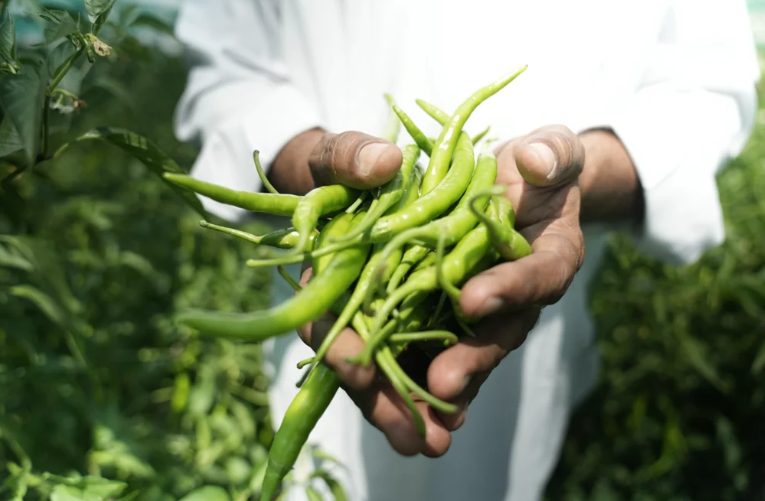
Equally significant has been the strengthening of rural institutions. Farmer Producer Organizations supported under Samadhan have demonstrated steady capital formation, improved governance, and growing business maturity, collectively achieving turnovers close to ₹20 crore over the past three years.
These institutions have played a critical role in expanding market access for farmers, enabling collective procurement of inputs, organised marketing of produce, and the adoption of value-added models that secure better price realisation.
The initiative has also contributed to the empowerment of women and small producers, particularly through dairy-based micro-enterprises that offer reliable income streams and foster a sense of community ownership.
By integrating farmers into more formal and efficient value chains, Samadhan has supported rural economic stability while reinforcing agriculture’s contribution to India’s Gross Value Added. At the same time, its emphasis on environmentally responsible practices has ensured that economic gains are aligned with long-term sustainability.
Way Forward
Building on the success of Samadhan, Hindustan Zinc plans to expand the programme’s reach to more farming communities across Rajasthan. Future efforts will focus on scaling micro-enterprises in dairy, horticulture, and other allied sectors, strengthening value addition, and deepening market linkages to ensure long-term income security.
Continued emphasis on capacity building, institutional strengthening, and sustainable practices will further enhance farmer resilience in the face of climatic and economic uncertainties.
Complementing Samadhan, Hindustan Zinc’s broader CSR initiatives, including Nand Ghar, Shiksha Sambal, and Unchi Udaan, continue to address education, nutrition, women’s empowerment, and skill development across thousands of villages.
Together, these integrated interventions reflect a holistic approach to community development, reinforcing the company’s commitment to inclusive growth, rural prosperity, and sustainable development aligned with national priorities and global development goals.

CSRBOX
CSRBOX.org is the single largest CSR information dashboard for CSR heads, board members of companies, nonprofit leaders, fundraisers, government agencies and social businesses to find latest updates in CSR domain in India. The platform is powered by India's largest social sector platform NGOBOX.
IMPACT TALKS

|

|

|

|

|

|


