.jpg)
ACC’s LEISA Project Boosts Incomes and Crop Yields for Farmers in Bargarh, Odisha
ACC, the cement and building material company of the diversified Adani Group, is making significant progress in sustainable agriculture through its LEISA (Low External Input Sustainable Agriculture) project. This initiative, conducted in collaboration with Rajiblochan Producers Company Limited (RPCL), a farmer producer organization (FPO) supported by the Adani Foundation, has been instrumental in driving positive change in villages surrounding the Bargarh plant.
The LEISA project aims to empower farmers by providing training and support for the adoption of organic farming methods and practices. Through this collaborative effort, several farmers have experienced a reduction in input costs, resulting in increased yields, enhanced crop quality, and ultimately, a boost in income.
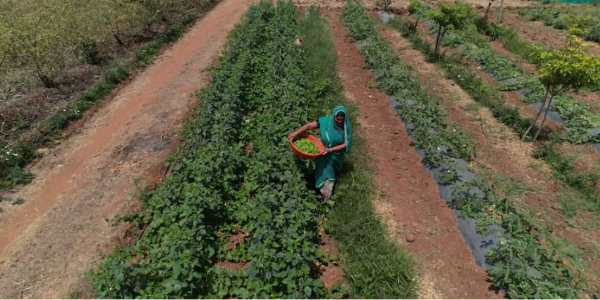
A standout success story from the project is Ahallad Pradhan, a 32-year-old farmer from Khedapali village in the Bardol block of Bargarh district. By transitioning from traditional paddy cultivation to organic farming with the assistance of RPCL, Ahallad diversified his crops to include cauliflowers, cabbages, tomatoes, sweet corn, and chilies on a rotational basis across three acres of land.
Witnessing improved plant growth, higher yields, and enhanced produce quality, Ahallad successfully sold his vegetables in the local market, generating a total income of Rs 4.16 lakh in a year. His net profit reached Rs 2.92 lakh, leading to a monthly income of Rs 24,300. This remarkable increase in income has not only supported his family of five but also enabled him to save for the future.
The LEISA project stands out by providing farmers with organic inputs, including vermicomposting, bio-fertilizers, and bio-pesticides at subsidized rates. Additionally, it facilitates the marketing of the farmers' produce through RPCL. Beyond economic benefits, the project contributes to environmental conservation by reducing reliance on chemical fertilizers and pesticides, while simultaneously enhancing soil fertility and water retention.
ACC and Adani Foundation continues to make significant progress in promoting socio-economic development and ecological balance within the farming community in Bargarh district. The company remains dedicated in its commitment to corporate social responsibility (CSR) and creating a sustainable future for all.
About ACC Limited
ACC Limited, a subsidiary of Ambuja Cements, is one of India’s leading producers of cement and ready-mix concrete. It is a member of the diversified Adani Group - the largest and fastestgrowing portfolio of diversified sustainable businesses. ACC has 20 cement manufacturing sites, over 82 concrete plants and a nationwide network of channel partners to serve its customers. With a world-class R&D centre, the quality of ACC’s products and services, as well as its commitment to technological development, make it a preferred brand in building materials. Established in 1936, ACC has been recognised amongst India’s Most Trusted Cement Brand by TRA Research in its Brand Trust Report 2023 and among ‘Iconic Brands of India’ by The Economic Times. ACC is counted among the country’s 'Most Sustainable Companies' and is recognised for its best practices in environment management and corporate citizenship. With sustainability at the core of its strategy, ACC is the first Indian Cement Company to sign the Net Zero Pledge with Science Based Targets.
About the Adani Foundation
The Adani Foundation, the community support and engagement arm of the Adani Group, is dedicated to making strategic social investments to achieve sustainable outcomes throughout India. Since 1996, the Foundation has focused on core areas including education, health, sustainable livelihood, skill development and community infrastructure. With its strategies based on national priorities and global Sustainable Development Goals (SDGs), the Foundation is known for its innovative approach and focus on sustainability, which contributes to the well-being and wealth of communities surrounding the Adani Group's businesses and beyond. At present, it operates in 5,675 villages across 19 states, impacting the lives of 7.6 million people.
IMPACT TALKS

|

|

|

|

|

|
IMPACT STORIES
|
|
|
|
|
|


