Amazon to open a homeless shelter inside its headquarters
As big tech gets bigger, industry leaders have been quite vocal about helping the homeless populations, especially in the regions where high salaries have driven up the cost of living to heights not seen before. Last January, Facebook and the Chan Zuckerberg Initiative, among other participants, formed a group called the Partnership for the Bay’s Futurethat said it was going to commit hundreds of millions of dollars to expand affordable housing and strengthen “low-income tenant protections” in the five main counties in and around San Francisco.
Microsoft meanwhile made a similar commitment in January of last year, assuring $500 million to increase housing options in Seattle where low- and middle-income workers are being priced out of the city and its surrounding suburbs.
Amazon has made similar promises in the past, with CEO Jeff Bezos pledging $2 billion to combat homelessness and to fund a network of “Montessori-inspired preschools in underserved communities,” as he said in a statement posted on Twitter at the time, in September 2018.
Now, however, Amazon is taking an approach that immediately raises the bar for its rivals in tech: it’s opening up a space in its Seattle headquarters to a homeless shelter, one that’s expected to become the largest family shelter in the state of Washington.
In the spring of 2017, Amazon offered Marty Hartman a space in its Seattle headquarters to open a homeless shelter. It was something much unexpected. Marty’s organization, Mary’s place, is a nonprofit organization that provides shelter for homeless residents in Seattle. Mary’s Place first opened as a day centre for single homeless women two decades ago. It has been operational since 2016 out of a Travelodge Hotel on Amazon’s campus. The stay was meant to be temporary as Amazon planned to renovate the building for its own use.
“I was fully expecting that we would close and move on and just be grateful for the opportunity,” saidHartman. “We just really wanted to make sure that we were good neighbours and we got out on time. We had no idea that they had even been thinking about building us a permanent home.”
Hartman expects to move into the new space sometime in the first quarter of 2020.
The shelters will have the capacity to serve 275 people each night. That’s a small portion of the local homeless population – about 12,500 people in King County, where Seattle is located – but it’s expected to be the largest family shelter in Washington State.
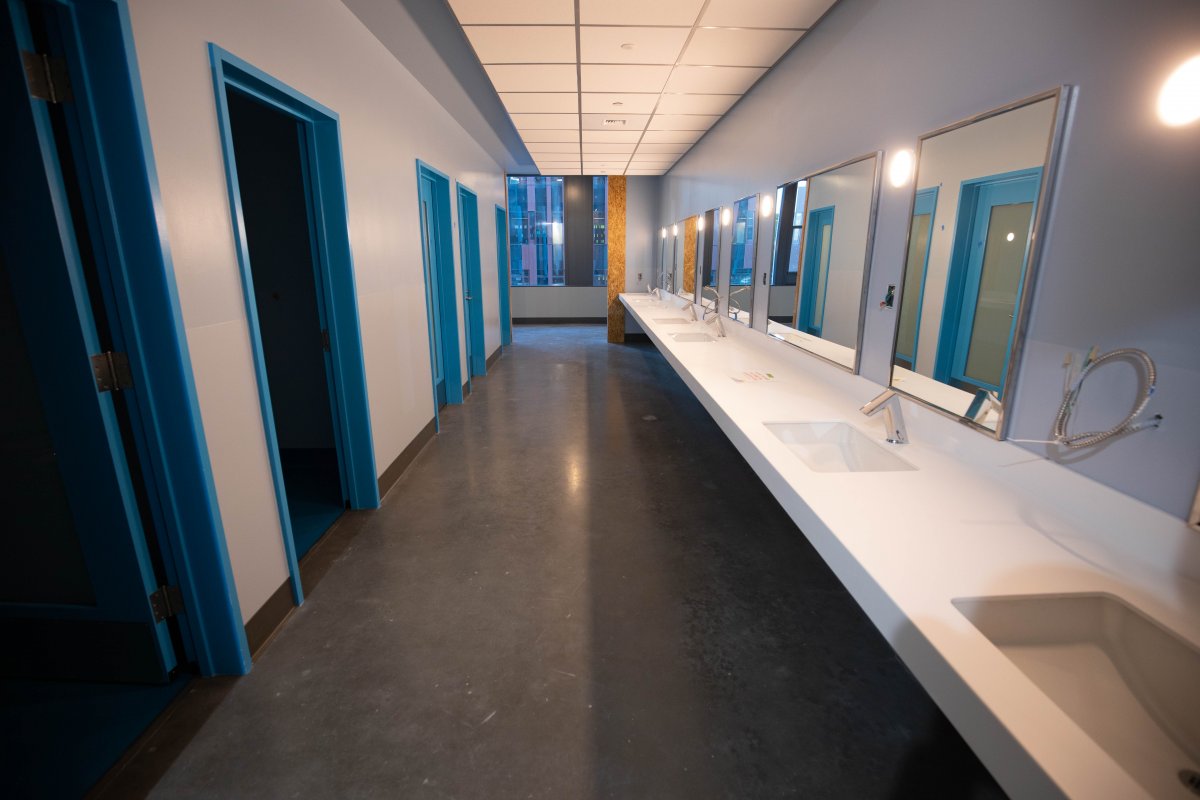
The shelter will offer individual, private rooms for families, who are allowed to bring pets. In “hygiene areas,” occupants can take baths (many shelters only have showers), and an industrial kitchen is expected to produce 600,000 meals per year.
The space is located across the street from the Amazon Spheres – prominent glass domes that double as an employee workspace and greenhouse.
“It will be about a 46% increase in the number of shelter beds that we currently have,” Hartman said.
Seattle saw a considerable rise in rents and home prices after Amazon built its campus there in 2010. From 2007 to 2017, the median rent in Seattle increased by nearly 42%, compared to 18% nationwide. Homelessness in Seattle has also risen by 9% each year since 2014.
While some residents attribute this escalating homelessness crisis to Amazon’s presence in Seattle, Hartman blames a lack of affordable housing.
“It’s not one entity that’s going to solve this,” she said. “It’s not on corporations. It’s not on congregations. It’s not on government. It’s not on foundations. It’s all of us working together.”
Now, however, Amazon’s approach immediately raises the bar for its rivals in tech: it’s opening up a space in its Seattle headquarters to a homeless shelter, one that’s expected to become the largest family shelter in the state of Washington.
It’s a move that no other tech company has taken. The decision also underscores other cities’ equivocation over where their own, growing homeless populations should receive support. A homeless shelter at the heart of a company like Amazon is worth acknowledging.
The Amazon shelter will be its largest space yet, with enough beds and blankets for around 400 families each year. The shelter will also have room for 75 additional people during weather emergencies. Two floors (30 rooms in total) will be reserved for families of children with life-threatening illnesses.
Amazon has offered to pay for the space’s utilities, maintenance, and security for the next 10 years – or as long as Mary’s Place needs it. It’s also covering the rent.
Mary’s Place will be responsible for funding its own operations, programming, and staff in the space. The organisation told CityLab that those expenses could amount to $US2 million a year.
At the new shelter, Mary’s Place plans to operate health and legal clinics, where Amazon has offered to provide pro bono counselling.
The organisation’s mission now, she said, is to make sure no child in the county sleeps on the street.
“That child outside tonight that might be on a feeding tube, that’s waiting for a kidney transplant, that just wants to graduate from high school or their mum wants to see take their first step – those are things that we can solve,” she said. “We can bring them in and they will move to housing. It will just take a minute. It’s one season of their life.”
IMPACT TALKS

|

|

|

|

|

|
IMPACT STORIES

|
|
|

|
|
|


