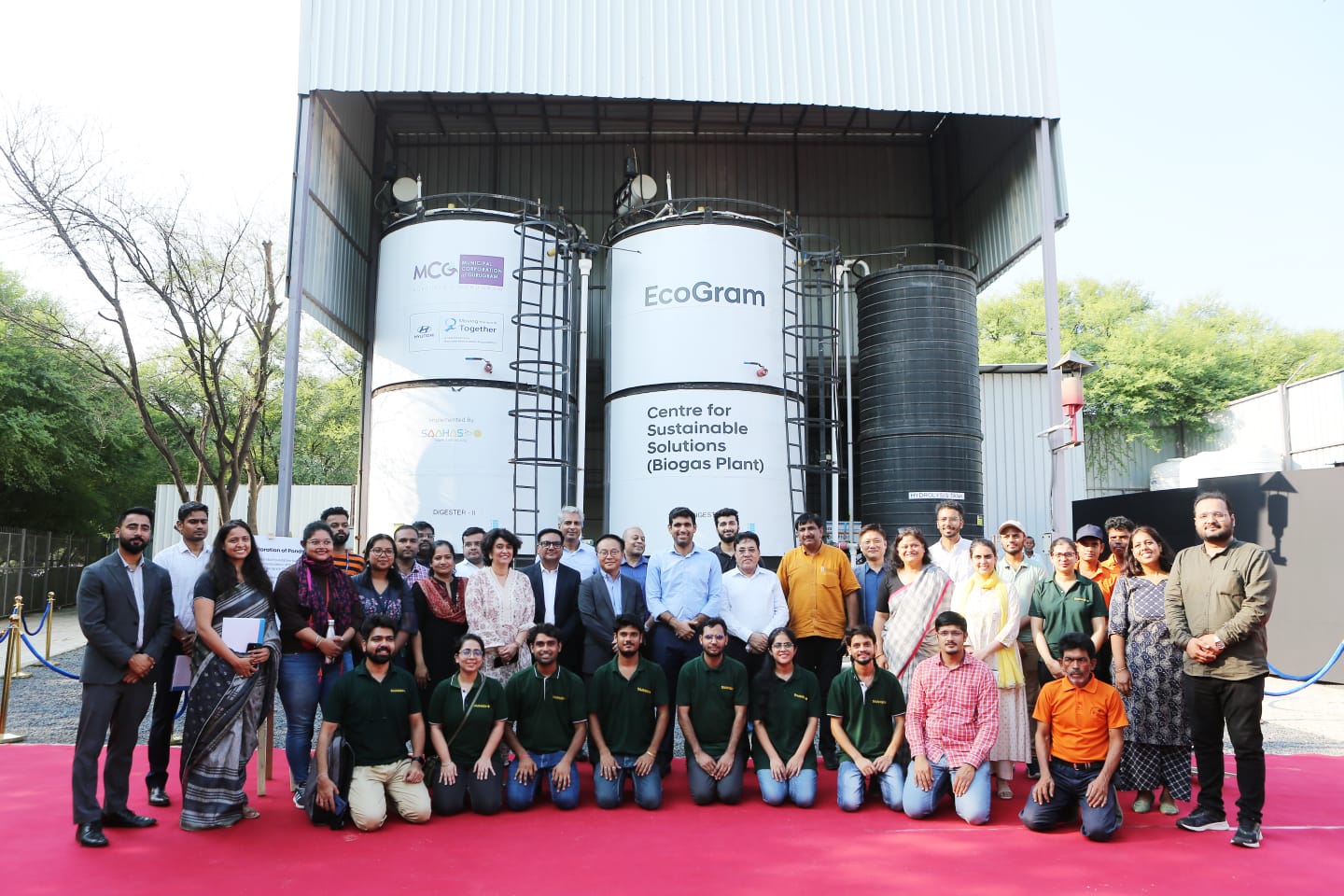
Ecogram: Waste Gurukool in Gurugram
Haryana govt decided to rename the millennial city Gurgaon to Gurugram, which means the land of Guru, in a bid to pay homage to one of the most revered teachers in Hindu mythology - Guru Dronacharya and his legacy of making this land as a centre of education. Living up to its name, it does boast of famous educational institutions, however, the city needs schooling on multiple fronts. One of the biggest issues that the city faces is sustainable waste management practices. Gurugram hasn’t fared too well in the cleanliness assessment drive - Swachh Survekshan done by Government of India, owing to its abysmal state of overall cleanliness. To fulfill this gap, a unique experiential learning environment - Ecogram- Centre for sustainable solutions, has been established. It provides one of a kind opportunity for common citizens to understand how their waste must be processed to drive sustainability. As Gurugram’s first integrated decentralized waste management and resource recovery centre, different kinds of waste are processed at the site; further to hold discussion and training sessions, there is an open-air, lush-green amphitheatre called अर्थSHALA.
The facility has been set up by an NGO – Saahas, under a Public Private Partnership between Municipal Corporation of Gurugram (MCG) and funding partners -Hyundai Motor India Ltd, SBI Cards and Signode. Located in Sector 53, near Paras hospital, Ecogram is a working model of an integrated solid waste management (SWM) centre that offers scientific disposal of 7 TPD (Tons per day) of municipal solid waste consisting of organic, recyclable and non-recyclable fractions. This translates into processing waste of more than 38,000 individuals (CPCB Annual Report, 2020-21, per capita waste generation in Haryana is 182 gm per day). The 7 TPD includes a 2 TPD biogas plant using wet waste to generate electricity along with a semi-mechanized composting unit to convert 1.5 TPD kitchen waste into nutrient-rich fertilizer, both are currently operational. A 5 TPD Material Recovery Facility to manage dry waste will be operational in a few months. Located in the same centre, अर्थSHALA has an open-air theatre, display boards with IEC material, black boards and a sitting area amidst the native grass and plants. This space, envisioned as a place for holding conversations on sustainability, was constructed using discarded marble and bricks that would have otherwise ended up in landfills.
Saahas - a not for profit organization working in the field of solid waste management and propagating Circular Economy principles for over two decades conceived the idea of Ecogram based on the success of their waste management centres called KasaRasa in Bengaluru. What distinguishes such centres from a dhalao or garbage collection points, is that they operate with no nuisance to the health and environment of the vicinity. Saahas has also implemented source segregation in the areas that are sending their waste to the centre, hence it receives clean segregated waste that can be processed for maximum resource recovery. What makes this facility even more critical in Gurugram is that despite having earned the reputation of millennium city, the city is struggling to contain its own waste. The deplorable situation of waste management in the city worsened by dismal service of the MCG concessionaire and frequent strikes by sanitation workers have led to various challenges such as delays in waste collection, unauthorized waste dumping, open burning of waste and choking of drains at multiple locations across the city. Bandhwari landfill where unsegregated waste generated in the city is dumped is currently over 40 metres high and is amongst the tallest landfills in north India. The mismanagement of this landfill caused by dumping mixed waste has led to more than its fair share of environmental issues such as leachate, uncontrolled fire etc., which is more pronounced owing to its location in the eco-sensitive Aravalli range. Haryana government has already been penalized by National Green Tribunal for piling up waste at the site, and consequently, hon’ble Chief Minister of the state approved tenders worth Rs. 150 crores to process less than half of the 33 lakh MT of legacy waste, as per official figures.
The only way out of this crisis is adopting a sustainable and scientific approach towards waste management; and decentralized solutions such as Ecogram can become the key triggers to bring about this change. When people are able to observe the contrast between a dumpsite and a sustainable processing facility, they want to actively contribute towards such systems. The prime location of these centres is of strategic importance as it keeps them in the radar of nearby communities enabling easy access and learning opportunities.
Waste segregation at source is a must for such decentralised waste management facilities. In Gurugram, Saahas has been at the forefront in driving source segregation through community engagement, operationalizing decentralized waste management for bulk waste generators and capacity building of waste collectors through various initiatives since 2017. Having recognized the efforts in addressing the enormous waste problem in the millennium city, MCG collaborated with Saahas to set up this model waste management unit in Ward 32 on public land.
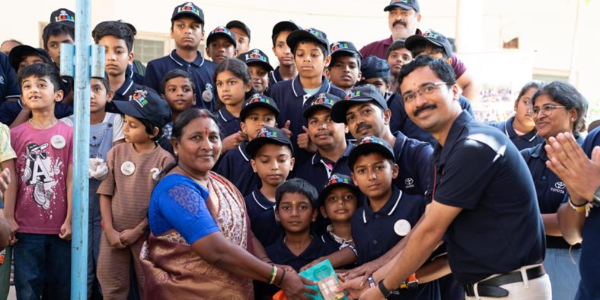
Apart from the obvious environmental benefits of Ecogram in reducing GHG emissions due to landfilling and transportation of waste; there is also a financial advantage for any Municipality as waste transportation cost is one of highest cost heads. The electricity generated by the biogas unit at Ecogram is utilized for the unit equipment power supply as well as to light up the public spaces in the vicinity. On-site management of segregated waste in this centre established in the heart of the city is drawing the attention of officials and citizens alike. Ever since the formal inauguration in July 2023, the centre has had 80+ visitors - from administrative and corporate officials to foreign dignitaries and students, each of them applauding the initiative and the vision behind its conception.
There are initial challenges when establishing such units owing to the “Not in my backyard” approach by people. Ecogram also faced initial hiccups as the locals living in the vicinity opposed the construction owing to the typical unhygienic conditions of the MCG transfer station nearby. But, once the centre was operationalized and the transfer station got shifted to another location, there were no complaints thereafter. In fact, there is enhanced community ownership once people see their waste is being processed in close proximity to the point of generation. Thus, Ecogram is an experiential learning centre where awareness meets actions, it showcases decentralized solid waste management and compels individuals and communities to adopt sustainable lifestyles in line with our Prime Minister’s initiative of LiFE – Lifestyles for Environment. It is a space where waste is not wasted, conversations on trash are not trashed, and the legacy of the Guru is not compromised.
IMPACT TALKS

|

|

|

|

|

|
IMPACT STORIES
|
|
|
|
|
|


