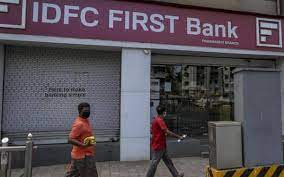
IDFC FIRST Bank to offer 350 MBA scholarships to financially needy students
IDFC FIRST Bank on Tuesday said it will offer 350 scholarships to financially needy meritorious students to purse their MBA degrees this year.
Each student will receive financial assistance of ₹200,000 from the bank following an application process that is under way and will end by 2 September.
The programme is open to Indian students who are accepted for the MBA programme across select 119 B-schools in the country for the 2021-23 batch.
“The student must be an Indian national and enrolled for a two-year, full-time MBA 2021-23 batch, or its equivalent in an Indian university or college that is part of the programme. The student must come from a family that has gross annual income from all sources less than or equal to ₹600,000 per annum," the bank said.
“At IDFC FIRST Bank…we realized that the rising costs of pursuing a management degree can act as a deterrent for even the most meritorious students, and thus, we instituted the MBA scholarship programme…to support deserving students," said Rachana Iyer, head-corporate social responsibility, IDFC FIRST Bank.
“The covid-19 pandemic has caused severe setbacks to many families. Hence, this year, our scholarship programme will support 350 students, the largest since inception. We strongly believe that our students will build a career that will ultimately empower them to secure a better future for themselves and their families," said Iyer.
To be sure, an MBA degree at top Indian B-Schools costs much more than ₹200,000. For example, the fee of two-year MBA degrees at various IIMs ranges from ₹10.6 lakh to ₹23 Lakh depending on their reputation. But any financial support to a financially weaker student benefits immensely.
The MBA scholarship programme was instituted as a CSR initiative by erstwhile Capital First in 2016 and continued after the merger which resulted in the formation of IDFC FIRST Bank. So far, 677 students from both urban and rural India have benefited from this programme, the bank said.
These students belong to diverse family backgrounds with parents being retired lower-income scale government employees, auto-rickshaw drivers, farmers and other such socio-economic backgrounds.
IMPACT TALKS

|

|

|

|

|

|
IMPACT STORIES
|
|
|
|
|
|


