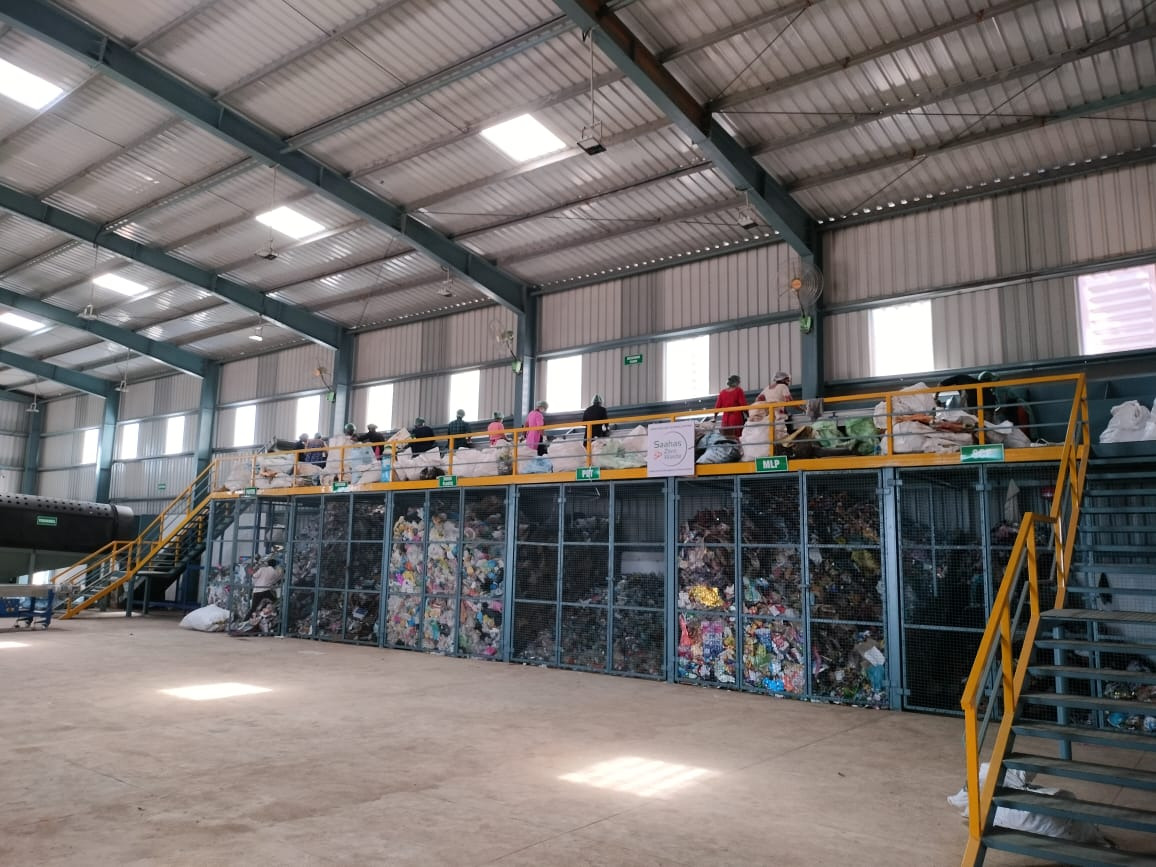
Saahas institutionalises 3 MRFs in rural Karnataka
Economic growth in rural India is leading to a shift in lifestyles, with households generating more non-biodegradable waste. This trend poses a significant challenge for local authorities, particularly in villages. Most lack the infrastructure and expertise to handle this waste disposal scientifically. The non-recyclable portion of this waste is not only costly and difficult to dispose of, but it also has a high tendency to be littered. This impacts both public health and the health of aquatic and terrestrial ecosystems. Due to a lack of awareness, residents often resort to harmful practices like open burning or dumping, further exacerbating the problem.
In cities, Material Recovery Facilities (MRFs) are key to managing waste economically by sorting recyclables. However, as rural waste management is still developing, ensuring a consistent and sufficient supply of waste to these facilities remains a challenge, hindering their viability.
The Karnataka Department of Drinking Water and Sanitation (DDWS) partnered with Saahas, a leading waste management NGO, to implement a pilot program establishing Material Recovery Facilities (MRFs) at the taluk level (sub-district administrative unit). This initiative aims to improve solid waste management in the state. Saahas, with its two-decade-long experience in waste management, played a crucial role in the project named "Paripoorna." They received a grant from HCL Foundation to establish a segregated waste collection system in villages near the pilot MRFs. Currently, 3 MRFs in Nitte (Udupi district); Yedapadavu (Dakshina Kannada district) and Ramanagara (Ramanagara district) located in rural Karnataka are operational. To achieve a regular supply of segregated waste, Saahas undertook several crucial steps:
● Mass awareness campaigns: Door-to-door campaigns educated residents about waste segregation at the source.
● Capacity building: Gram Panchayat (village council) members were trained on waste management practices.
● Sanitationworkertraining:Sanitationworkersreceivedtrainingonproper collection and handling of segregated waste.
These efforts ensured a consistent flow of segregated dry waste to the MRFs. The facilities then further sort the waste into various categories for:
This pilot project in Karnataka demonstrates a promising approach for rural waste management. Combining government collaboration, NGO expertise, and community engagement can lead to a more efficient and sustainable waste management system.
IMPACT TALKS

|

|

|

|

|

|
IMPACT STORIES
|
|
|
|
|
|


