Teaching Social Entrepreneurs How To Raise The Right Money From The Right Investors
It’s a perplexing world for social entrepreneurs looking for funding--and they're often left not knowing where to look, from whom and just how to communicate what they need.
For one thing, there’s a crazy quilt of funding types, from funds to foundations. At the same time, they’re often steered to venture capital--or, that’s what they usually come across in their research--although many of them aren’t the type of fast-growth enterprises that such investors want. Plus, the funding they attract typically is the wrong kind. That means, say, they took on debt but, because they were in R&D mode, couldn’t pay it back.
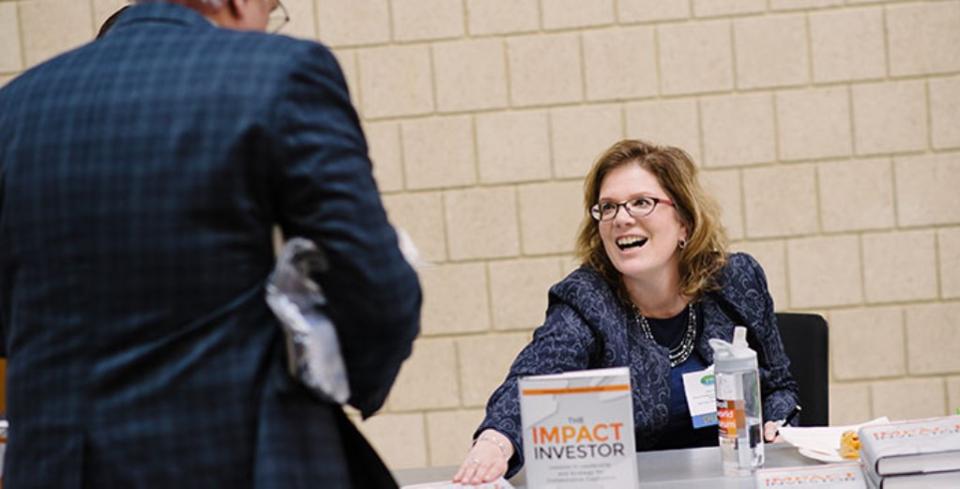
So says Cathy Clark, director of CASE i3 Initiative on Impact Investing at Duke University’s Fuqua School of Business. With that in mind, Clark, a long-time researcher in social enterprise and impact investing, and colleagues are about to release a series of online modules and other curriculum aimed at impact entrepreneurs seeking money, as well as accelerators interested in providing more tools for the founders enrolled in them.
Called Smart Impact Capital, it draws on real-world experiences, including those Clark had while helping to run SEAD, an accelerator for healthcare-oriented impact enterprises in Africa and India. The 12 hours of material are organized in three buckets--Develop Your Investment Strategy, Target Smart Capital and Interact with Investors--each with a variety of videos and other content, produced in bite-sized pieces.
The goal: to teach entrepreneurs everything they need to know about raising money before they hit the ground running, and, in particular, how to communicate what they need and what they're about to potential investors.
According to Clark, while working with and holding the hands of entrepreneurs in SEAD, which was run with USAID and launched about five years ago, she got an in-the-trenches view of their financing trials and tribulations. (These were a mix of nonprofits and for-profits with about $1 million in revenue). “It’s a crazy process,” says Clark.
Most important, entrepreneurs seemed to be just plain confused about their options and struggling to figure out how to communicate their value. “I would ask for their target list of investors and about 75% of the names were completely inappropriate,” she says. “Instead, they were just flying around the world, meeting whomever they could.”
In fact, she saw founders straining to fit into shapes potential investors wanted their investments to match. That had many implications--for example, for the kind of funding available. Social entrepreneurs, who may require a longer time to grow than other companies, really need different types of financing from other businesses, according to Clark—say, variations of debt where entrepreneurs pay back the money back from revenues. But mainstream funders tended to offer debt or equity, or maybe convertible debt, and that was all. Plus, VCs insisted on fast growth in a shorter time horizon than often was appropriate. “So entrepreneurs tried to paint themselves as higher-growth than they were,” says Clark.
At the same time, she started contacting other accelerators to learn about their curriculum. And she found that few offered real classes; mostly, they were about mentors and access to investors. “And the other catch was, most of the investors have a VC background,” she says.
With all that in mind, about two years ago, she started developing what could become a common curriculum for impact entrepreneurs seeking financing--information with which they could be more strategic, better informed and more articulate about their fundraising. "It's really a big decision, who you get your capital from and on what terms," she says. "It will influence the next five years of your business no matter what." The online “toolkit” will be launched officially be at SOCAP on October 10.
IMPACT TALKS

|

|

|

|

|

|
IMPACT STORIES

|
|

|

|
|

|


